October 4, 2026
ADA Compliant Easily Accessible Mobile Restrooms: What Rental Consumers Need To Know
By @tysonycba400
If you are leasing portable toilets for an occasion, public celebration, community program, or short-term site available to participants past a personal crew, ease of access is not a side information. It becomes part of whether people can participate with dignity, freedom, and fundamental comfort. That seems obvious when mentioned plainly, yet mobile hygiene is one of those areas where individuals often concentrate first on unit counts, distribution windows, and pump-out timetables, then recognize later that they have actually not believed thoroughly enough concerning access.
I have actually seen this take place in planning discussions more than once. A client will ask for "one handicap unit" as if that expression alone works out the matter. It does not. An ada easily accessible portable toilet is not simply a larger box went down somewhere near the conventional devices. The placement issues. The path issues. The entrance issues. The interior design matters. Also the means the device is marked matters.
That is why rental clients ought to comprehend the basics prior to the vehicle arrives.
The main guideline consumers need to know
For collections of mobile single-user commode units, a minimum of 5 percent of the units in each cluster have to come. That common uses even at temporary occasions. For several consumers, that is the single crucial starting factor, due to the fact that it transforms just how you count devices and exactly how you intend the bathroom area.
This point obtains missed out on surprisingly commonly. A person may presume that since an occasion is brief, outside, or temporary, the accessibility demand is in some way unwinded. It is not, based upon the governing government access criteria and just how they are translated for short-term portable toilet arrangements. If you have a cluster of portable single-user units, you need accessible units in that cluster at the called for ratio.
That suggests the discussion ought to begin with the cluster count, not with a vague request for "an ADA system if we have area." If you are leasing ten mobile bathrooms together in one bank, your planning needs to currently represent the required obtainable presence within that collection. If you are producing separate washroom groups in different areas of a website, each collection needs to be considered on its own.
That last part issues greater than customers expect. I have actually seen designs where organizers put typical systems near the major task location and placed the available mobile bathroom elsewhere because there was "even more area over there." From a practical point ofview, that commonly produces disappointment for individuals. From a conformity point ofview, it additionally misses out on the reasoning of the regulation, which looks at each cluster.
"ADA compliant" indicates more than extra floor space
A great deal of rental shoppers use terms like ada mobile washroom, ada mobile toilet, ada certified portable bathroom, and ada-compliant portable restroom mutually. In everyday conversation, that is easy to understand. In technique, though, what you are seeking is an unit and setup that meet the appropriate availability requirements, not merely a roomier model.
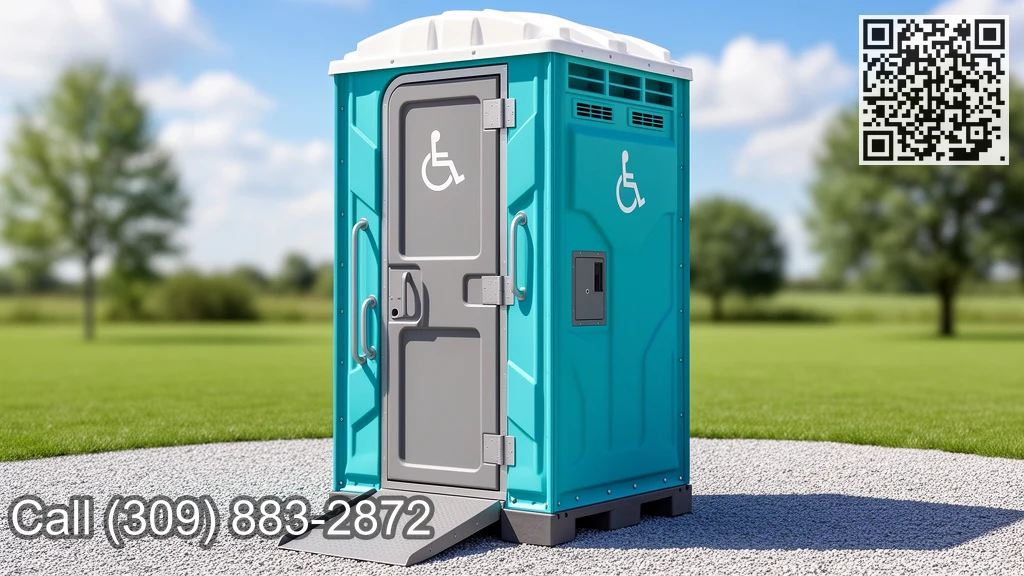
The federal standards compare a system that is advertised casually as easily accessible and one that in fact satisfies the relevant design and format needs. Portable obtainable systems need to fulfill toilet-room technological needs, including clearances for handling, turning area, and door handling, in addition to relevant policies for grab bars and water-closet clearances. The entrance and route also have to be accessible, and if ramps or landings are needed, those have to abide by ADA technical demands too.
That is why seasoned organizers ask better concerns than "Is it the huge one?" Size alone does not address whether the device helps genuine users or whether the setup is compliant once it gets on site. A big system positioned in mud at the end of a rutted course is not operating as an easily accessible remedy. Neither is a properly constructed unit whose entry is obstructed by grade changes, soft ground, or inadequate positioning.
This is among the most vital state of mind changes for consumers. Availability has to do with use in the real conditions individuals run into on the day of the event or rental period.
The route to the toilet belongs to the restroom
This is where lots of otherwise mindful plans start to break down.
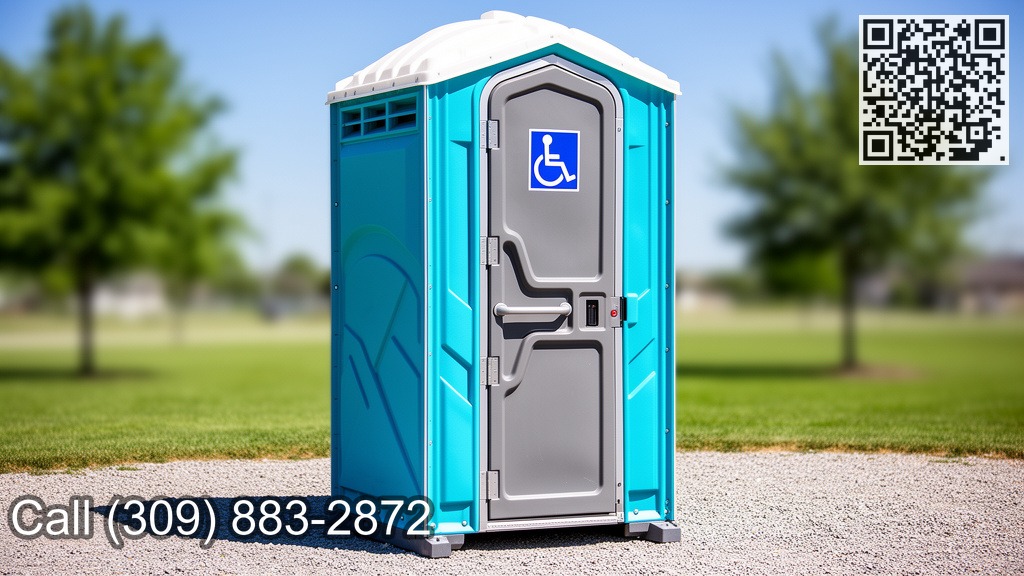
Customers will hang around discussing the variety of units and nearly none talking about how somebody reaches them. Yet the obtainable path is part of the demand. If an ada compliant obtainable portable toilet is delivered to a sloped patch of lawn, set behind a curb, or positioned where somebody needs to cross loose gravel or deep mud, the problem is not just bothersome. The setup might fail the availability need due to the fact that access is not practically the indoor compartment.
Think concerning the toilet trip from an individual's point of view. They reach the website, approach the assigned bathroom area, approach the entryway, unlock, maneuver within, utilize the component, and departure securely. Every part of that sequence matters. If any type of step becomes difficult or difficult because of the path, the setup is refraining what it is intended to do.
This is specifically pertinent at festivals, fairs, races, pop-up venues, and momentary community events where the premises might be irregular or modification with weather. A site that looked workable during a bright walkthrough can end up being much more difficult after rain. I have actually seen event fields transform from "solid sufficient" to deeply rutted by vendor traffic in a single mid-day. When that happens, the obtainable course ends up being the initial thing to fail.
Customers do not need to become code professionals to plan well. They do require to recognize that an ada portable commode leasing involves more than selecting an unit from a magazine. Website conditions belong to the decision.
Identification is not optional
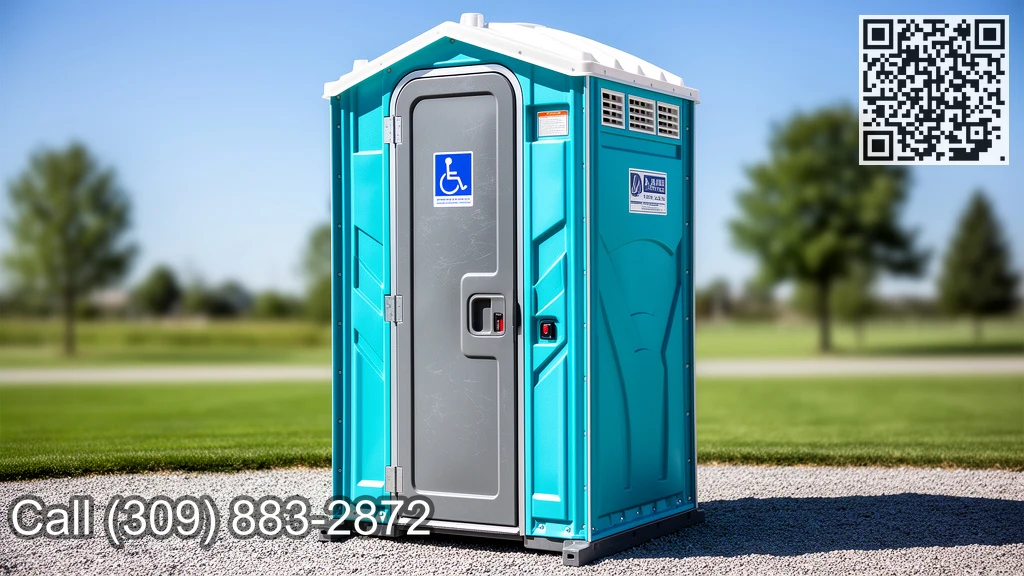
Accessible mobile toilet devices have to be related to the International Icon of Availability. This may look like a minor detail compared to route accessibility or indoor maneuvering room, however it has actual value. Individuals need to be able to find the appropriate unit rapidly and with confidence. Clear identification reduces complication for users and team alike.
It also prevents an all-too-common issue at busy events, where participants walk past an obtainable system due to the fact that it does not stick out clearly, then think none is readily available. Good recognition sustains actual use, and real usage is the entire point.
If you are the consumer, do not assume this will be managed immediately without conversation. Verify exactly how the device will certainly be recognized and see to it the accessible device is not hidden behind barriers, storage, or crowd-control fencing.
One special exception customers sometimes listen to about
There is a slim context that causes confusion: mobile commode systems at construction websites made use of specifically by building and construction personnel have actually been discriminated under the older pointed out 1991 requirement. Some individuals hear that and incorrectly end that portable washroom accessibility guidelines are usually looser on job websites or temporary locations.
That is not a secure basic assumption.
For basic mobile bathroom leasings, the accessible-unit requirement stays pertinent. If your setup serves the public, event guests, consumers, or others beyond that particular exempted construction-personnel context, you should not rely on that exemption. It is among those details that gets repeated casually and misconstrued promptly. Rental clients are far better off dealing with access as an expected planning need unless they have a very specific factor, grounded in the actual rule context, to believe otherwise.
Why "temporary" does not suggest "lesser"
There is a behavior in occasion planning and temporary-site logistics of treating temporary setups as in some way informal. If it is only there for a day or a weekend break, people think excellence is impractical. Genuinely, not every event website is very easy. Fields are unequal. Shipment courses are limited. Utility disputes appear late. Timetables slide. Yet none of that transforms the importance of providing access.
For the person that needs the ada handicap easily accessible mobile washroom, the service is not a triviality. It is whether they can stay at the event without leaving early. Whether they can attend a graduation, sustain a family member at a competition, work a booth through a long shift, or simply avoid the shame of having no functional option.
That is why compassion belongs in this conversation together with compliance. The criteria issue due to the fact that they safeguard real participation.
Questions worth asking prior to you sign the rental order
A short, practical discussion up front can protect against one of the most typical issues. You do not require a lawful memorandum. You require clarity on the unit, the cluster, and the website conditions.
- How several mobile single-user units will certainly be in each cluster, and the amount of of those will certainly be accessible?
- Where exactly will the easily accessible device be placed relative to the washrooms people are anticipated to use?
- What is the path to the system like on the real ground, not just on the website map?
- Will the accessible device be clearly identified with the International Symbol of Accessibility?
- If ramps or landings are required, who is in charge of guaranteeing they follow the applicable technological requirements?
Those 5 questions are simple, however they require the best conversation. They additionally reveal rapidly whether a supplier or website coordinator is believing in functional terms or just checking a box.
Placement mistakes that create headaches later
The most frequent problem I see is not a lack of good objectives. It is last-minute decision making.
An organizer might reserve ada certified mobile toilets early, then allowed one more site adjustment push the devices into a worse location. Occasionally a food vehicle line increases. In some cases a short-term fence shifts. In some cases the restroom bank ends up beside an incline since the flatter location obtained asserted by staging tools. None of those adjustments really feel significant when they take place one by one. With each other, they can threaten accessibility.
Another mistake is separating the accessible unit to "give it even more area." On paper that sounds mindful. In practice it can suggest the available device is much from the primary restroom location, improperly lit, more challenging to locate, or reachable only via a different route that is less stable.
There is likewise the weather condition trouble. Dry grass is not the like rain-soaked grass. An event manager might stand on an area in setup footwear 2 days prior to opening and assume, this is fine. After that distribution automobiles, vendor website traffic, and a little water alter the whole surface. If your occasion depends on exterior positioning, it is worth thinking through what happens if problems worsen.
Good preparation usually looks much less dramatic than poor preparation. It is picking the flatter course. Keeping the technique clear. Securing the path from infringement. Confirming the placement after other vendors are appointed. None of that is extravagant, however it is what makes an ada compliant portable bathroom usable.
Accessibility and client trust go together
People notification when lodgings are thoughtful, and they discover when they are token gestures.
If your visitors or attendees consist of older adults, handicapped attendees, caregivers, experts, or any person using wheelchair equipment, they are already checking a site in a different way than others are. They are discovering range, quality, crowd density, and whether the available restroom appears to have been prepared purposefully or added at the end.
That influences count on. When the toilet configuration really feels available in a genuine method, individuals often tend to think the remainder of the event has been planned with the very same care. When the accessible unit is embeded a certainly uncomfortable place, the message is difficult to miss.
This is one reason experienced coordinators significantly treat accessibility as part of the total visitor experience as opposed to a narrow compliance job. The lawful framework matters, but so does the human signal it sends.
The more comprehensive compliance environment is obtaining much more serious
Across lots of sectors, ADA conformity is being applied within a more comprehensive setting of accessibility assumptions. That does not imply every bathroom rental client needs to become a professional in every access regulation throughout the economic climate. It does imply access is not fading right into the history. If anything, companies are seeing that accessibility commitments https://rylankuif072.theglensecret.com/the-number-of-ada-certified-portable-restrooms-are-needed-in-a-rental-collection are active, visible, and significantly scrutinized.
That bigger context should encourage rental consumers to avoid faster ways. When a firm, district, school, church, or event coordinator makes sure with something as standard as portable hygiene accessibility, it is generally an indication of much healthier compliance behaviors overall.
What to expect from an excellent service conversation
A capable portable restroom carrier should have the ability to go over easily accessible alternatives in plain language. They need to understand that customers might request ada-compliant mobile bathrooms, ada certified mobile washrooms, or an ada mobile toilet service, which all of those terms point toward the same functional demand: an unit and arrangement that satisfy applicable availability requirements.
The greatest companies generally do 3 points well. They do not reduce the site problems. They do not treat recognition as unimportant. And they recognize that placement within the bathroom cluster matters.
Customers additionally have responsibilities. If you alter the website strategy after shipment, block the path with barriers or products, or move individuals with surface that endangers access, the problem is not fixed even if an easily accessible unit was initially delivered. Availability can be broken by inadequate event procedures also when the best device was ordered.
That is worth saying plainly due to the fact that rental customers in some cases assume compliance is entirely the vendor's worry. It is not that easy when the client manages the site format, web traffic flow, and final usage conditions.
When one unit is not enough
The 5 percent regulation is the standard for clusters of portable single-user bathrooms, yet clients should not assume just in terms of minimums divorced from reality. A minimum requirement is exactly that, a minimum. Depending upon the size and nature of the event, need patterns may make a bare-minimum strategy feel stretched also if the matter technically covers the base scoping requirement.
I would certainly be careful right here, however, since profundity depends on context. Crowd dimension, occasion duration, demographics, and site spread all matter, and not every circumstance validates exceeding the minimum count similarly. Still, if you expect hefty participation or numerous washroom collections across a wide website, it is wise to analyze actual customer flow, not only the limit inquiry of whether an available system exists somewhere.
This is where sensible preparation matters as much as formal scoping. An available system that is continuously occupied since the total setup was also lean can develop avoidable aggravation. Consumers who have held repeated yearly occasions usually learn this quickly.
A final preparation lens that helps
When choosing whether your setup is likely on the right track, it aids to visualize one visitor getting here alone and making use of the restroom without help. Could they discover the easily accessible system easily? Could they reach it utilizing the intended course? Could they go into, maneuver, and departure without unnecessary barriers? Would certainly the arrangement still work if the ground conditions became a little even worse than expected?
If the answer to any of those concerns really feels shaky, the strategy possibly requires an additional look.
An ada compliant easily accessible mobile toilet need to not be dealt with as an unique favor for a tiny team. It is a common part of making a temporary site help the general public. The clients who handle it ideal are rarely the ones with the biggest spending plans. They are the ones who ask far better questions early, validate the information, and consider the experience from the user's point of view.
That method serves compliance, definitely. More significantly, it serves people.
 Ask ChatGPT
 Ask Grok
 Ask Perplexity
 Ask Claude
 Ask Google AI
 Ask You
❧